
Where are the actual boundaries?
A fence, driveway, tree line, and tax parcel can tell four different stories. Start with the recorded description and available survey, then identify what still needs to be verified.
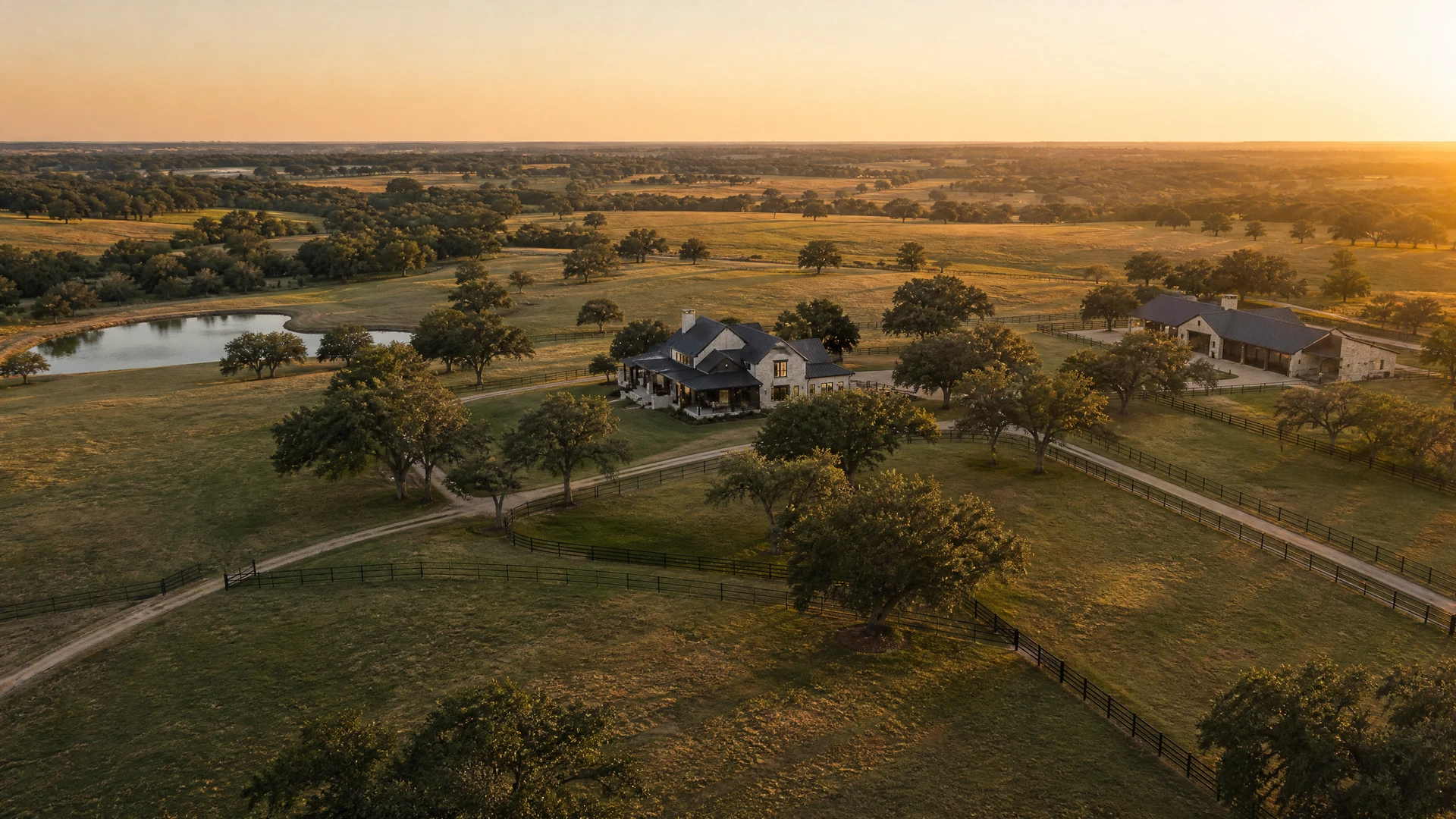
The Aubrey land guide · By Zac Hamilton
A locally grounded framework for evaluating acreage, equestrian property, land, and private estates before emotion outruns the facts.
Boundaries
Survey before assumption
Access
Frontage, gates, easements
Water
Drainage, ponds, floodplain
Use
Restrictions, improvements, fit
Read the whole property
Every property is different. These are not conclusions; they are the starting points for disciplined property-specific due diligence.
A fence, driveway, tree line, and tax parcel can tell four different stories. Start with the recorded description and available survey, then identify what still needs to be verified.
Road frontage, shared drives, gates, easements, and maintenance obligations affect privacy, daily use, and future options. Access should be understood before it becomes a contract issue.
Look beyond a blue line on a map. Drainage patterns, floodplain, ponds, creeks, soil, and low areas can influence improvements, insurance questions, and how the ground works after heavy weather.
Water source, septic, electric service, propane, internet, and utility easements shape both convenience and cost. Confirm what exists, who controls it, and what an intended use may require.
Barns, arenas, fencing, shops, guest quarters, wells, and roads deserve their own evaluation. Condition, permitting, placement, and usefulness matter more than a feature list.
The right property must fit the buyer’s intended use—horses, privacy, a future build, investment, or a long-term estate. Restrictions, jurisdiction, topography, and neighboring uses all belong in that decision.
Public source desk
These official resources can help establish context. They do not replace property-specific professional review.
Aubrey land questions
Begin with boundaries, legal access, floodplain and drainage, water and utilities, restrictions, improvements, intended use, and the condition of every major structure. The right sequence depends on the property.
Not necessarily. Fences may be practical boundaries rather than surveyed boundaries. Use the recorded legal description and an appropriate survey professional when boundary certainty matters.
They can affect how you reach, maintain, improve, share, or later sell the property. The document language and on-the-ground condition both deserve review.
Evaluate usable acreage, fencing, footing, barns, water, trailer access, drainage, neighboring uses, and the property’s ability to support the intended operation—not just whether a barn is present.
Hamilton & Co. can help define the search, monitor public inventory, use local relationships, and begin direct conversations where appropriate. Availability is never guaranteed.
No. It is a decision framework for asking better questions. Property-specific conclusions should come from the appropriate licensed survey, inspection, title, engineering, environmental, tax, insurance, or legal professionals.
When the property has consequences
Tell Zac what you are considering. You will get a direct conversation about the property, the questions, and the right next move.
Request a private consultation